
Menu


Select your Location:
Select your Location:
Stay updated on the latest festival news, book reviews, and more!
September 5, 2017

by Maya Baumann
In recent years, Canada has been talking a lot about reconciliation with the Indigenous nations of Turtle Island. Some recent governmental efforts include Harper’s 2008 apology for residential schools, the 2015 Truth and Reconciliation Report, and the launch of the National Inquiry into Missing and Murdered Indigenous Women in 2016. I hope you have wondered, at least once, “what can I do?” and I would like to suggest one answer to that question: read a book by a First Nations, Métis, or Inuit author.
My mother was born and raised in Canada to immigrant parents, and yet it wasn’t until she was in her 30s that she learned that Indigenous people even existed in Canada. When I was in school I was taught an abridged version of Canadian history, one that taught the fur trade and the Louis Riel rebellion but stopped just short of residential schools and systemic violence. My mother was taught the same, if not one even further abridged. It is this kind of erasure by ignorance that hinders efforts of reconciliation and creates barriers through the generations.
This is why I personally chose to take responsibility for my education in the history of colonization in Canada, as well as what First Nations, Métis, and Inuit communities face today as a result of that legacy. My undergrad in Indigenous Studies at U of T certainly gave me a clear picture of the facts, but it was through reading work like The Book of Jessica by Maria Campbell and Linda Griffiths that I started to better understand the emotions. It is this fullness of understanding through empathy that will best serve efforts of reconciliation, whichever form they take.
If you live in Canada and read, chances are you have read at least one book by an Indigenous author. At The Word On The Street, we want to help you find even more to read, so we invited fifteen First Nations, Métis, and Inuit writers to present their new children’s books, short stories, science fiction, essays, investigative journalism, and stage plays at our newest venue: Indigenous Voices.
Reading books from a perspective different from your own is one of the best ways to foster empathy. By reading books authored by Indigenous writers, you are taking responsibility for your own education and supporting the people making it possible. For the full line-up of authors appearing on September 24th, check out our Indigenous Voices schedule, meanwhile here is a taste of what you can expect to learn about, and who you can learn from.
 Lee Maracle brings us the answers to questions the Canadian public has been asking – and those she wishes we would ask – in her new collection of conversational essays Conversations with Canadians. It is the perfect introduction to facts about colonization in Canada and, depending on how we respond to the challenges of our shared history, the kind of future that could be built here. It is written in a wonderfully conversational tone, opening with Maracle offering the reader a seat at her kitchen table and a steaming mug of coffee. After all of the questions Canadians have asked her over the years, it is a clear invitation to simply sit and listen to the answers.
In her short story collection Glass Beads, Dawn Dumont follows four First Nations friends living in Saskatoon, all of them the among the first of their families to live off-reserve. These perspectives from young Indigenous people coming of age in an urban setting in the 90s and early 2000s provide important insight into the lives lead by young urban Indigenous communities. With an increasing majority of Indigenous peoples choosing to live in an urban setting, this relevant and contemporary collection is not one to miss.
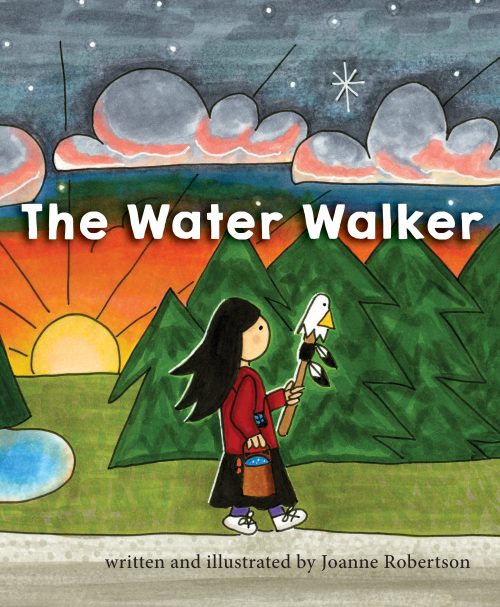 Children’s books have their place on the stage as well, teaching some vital lessons simply yet beautifully. Joanne Robertson wrote and illustrated The Water Walker to talk about the journey Josephine Mandamin and other water protectors took to raise awareness about water protection. The book talks about the importance of water protectors, a role taken traditionally by women in Ojibwe cultures.
Akilak’s Adventure was written by Deborah Kigjugalik Webster for her daughters to have Inuit culture represented in children’s literature. Akilak is a brave girl who sets out on a long journey to find food for herself and her grandmother, turning it into an adventure with the help of her imagination.
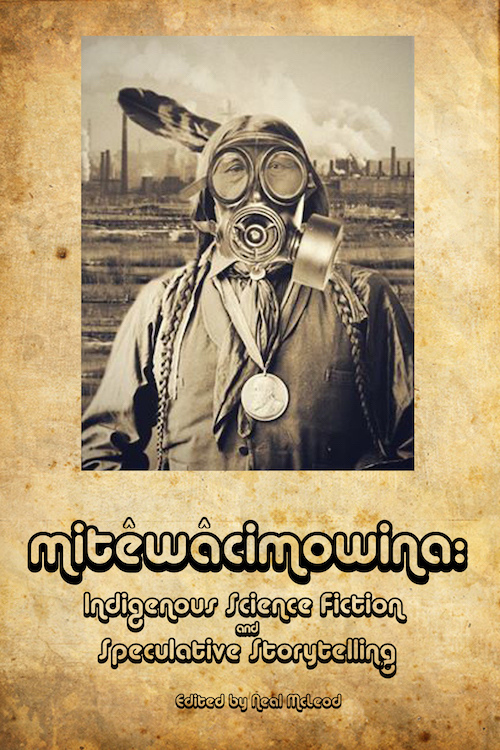 Indigenous authors are imagining the future, too, through science fiction and speculative storytelling. We are excited to welcome Cherie Dimaline and Drew Hayden Taylor to present a collection of these stories in mitêwâcimowina, roughly translated as Extraordinary Stories, published by Theytus Books and currently the only one of its kind. Editor Neal McLeod says it best in the foreword of the collection, “These narratives open a way to reshape Indigenous futures and also to reshape understanding of the past… This has provided Indigenous people, and indeed Canada as a whole, with a way of re-animating and re-understanding Indigenous storytelling.”
Indigenous communities across the country are facing challenges caused by the legacy of colonization, intergenerational disconnect, disconnect from the land, and disconnect from language and culture. These communities are also healing, rediscovering what was lost, relearning what was forgotten, and imagining better futures into existence. Alone, reading a book is not going to solve these problems, but by educating yourself you will be better prepared to answer the question “what can I do?” and promote reconciliation.
We hope to see you all at the Indigenous Voices stage on Sunday September 24th, where programming will run all day, from 11:00AM to 6:00PM.

Get updated with every post. Subscribe to our RSS feed.

Read our most recent press releases to discover the latest festival news.

Have a question about The Word On The Street Toronto? Find your answer here.