Menu


Select your Location:
Select your Location:
Stay updated on the latest festival news, book reviews, and more!
August 28, 2018
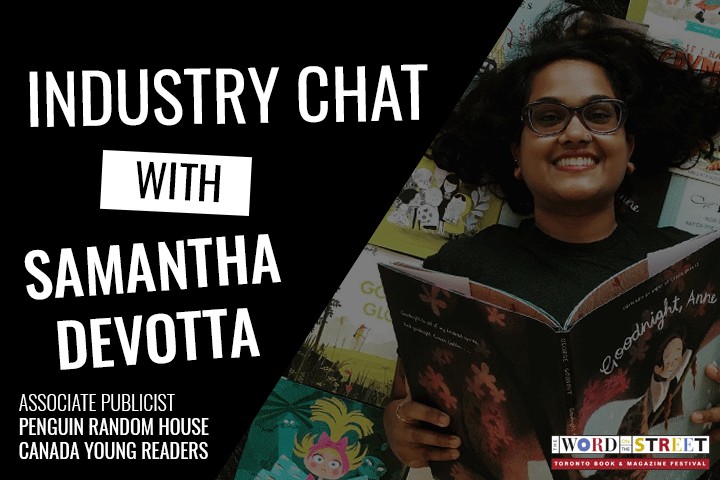
The Word On The Street Festival is a great opportunity to get to know Canadian authors and our literary landscape. But the festival is also a fantastic way to get to know the professionals who keep the publishing world turning! We sat down with Samantha Devotta to talk about getting into PR, YA lit, and what advice she has for budding publishing folks in Toronto.
WOTS: Welcome to WOTS Talks, Samantha! First off, can you tell us a bit about the day to day at Penguin? What’s the day in the life of an Associate Publicist like?
Samantha Devotta: Thanks for having me! My day starts off with checking my email and making a to-do list. Once that’s done, I don’t really have a specific routine—it often depends on what season I’m working on. I look at different ways to talk about “my” books, whether it’s pitching an author for an event or mailing out review copies. Sometimes I get to see my authors in person for a brainstorming session over coffee or a TV interview.
In addition to the books we publish here, I’m also the Canadian contact for Penguin Young Readers US. So occasionally, I get to chat with US-based authors and figure out how we can bring them over here, or I look at what kind of Canadian media outlets would be interested in those books.
WOTS: And let’s talk about the flip side! What does it look like for a publicist to work with the authors they represent? What can new authors expect when they finally sign that first book deal?
SD: As a publicist, I’m one of the last people that the author meets. By the time we’re introduced, they’ve already gone through the whole editorial process and are excited to finally get their book out into the world—and so am I! I usually meet them about a season before the book comes out so that we have plenty of time to start planning. We talk about what they’re comfortable doing and what their expectations are—do they want a launch? Are they interested in school visits? Is there a list of contacts who should be receiving their book?—and then I start working on those wish list items. It can take a while sometimes for a book to start getting some traction, but it’s so rewarding to see reviews and mentions popping up and I’m always thrilled to be able to share good news with my authors.
WOTS: You work with YA and YA authors—and we all know how much YA has grown into the book industry over the last couple of decades. What’s your favourite part about working with Young Adult lit? What kind of stories are your favourite to work with?
SD: I’ve always been such a big fan of YA (from about middle school to now) so it’s been amazing to watch it grow in popularity. I love the fact that I get to work with the books that I actually spend most of my time reading, and the authors who create them. I don’t get to read every book I work on (especially the US titles), but I try to read the ones that attract my attention the most so that when it comes to talking about them and getting other people excited, I have a more personal connection. I tend to read a lot of contemporary YA, so that’s probably my favourite genre to work with.
While I work with YA novels a lot, the other part of my job involves picture books and middle grade novels, and I love them both so much. People get very excited about beautiful art and Tundra Books has such a gorgeous selection list, which makes it (relatively) easy to pitch the picture books I’m working on.
WOTS: Can you tell us a bit about the difference between marketing and publicity for books?
SD: Marketing can include advertisements, social media, and promotional items (bookmarks, posters, etc)—things that our audience interacts with. Publicity is more author-facing—I’m the one who has a direct line to the author. I also organize events and work with the media, whether it’s pitching someone over email or mailing out a review copy. At Penguin Random House Canada , we have a small marketing and publicity team that focuses on kids’ books (there’s four of us in total—two in marketing, two in publicity), so sometimes there are opportunities for our jobs to overlap which can be very fun.
WOTS: When prospective industry professionals think about getting into publishing, they often think about editing first, and other departments later. How did you get into publicity, and what are actionable things prospective publicists can do to make themselves competitive applicants?
SD: I actually thought about editorial at first but was also interested in marketing. I was an editorial intern at Tundra a few years ago, and during that time, I helped out with social media (Twitter/Facebook/the Tundra blog), so that I got a little taste of what marketing could be. In my current role, publicity brings together the parts of editorial and marketing I like the most: I get to interact with authors and I have the chance to brainstorm creative ways to get the book out into the world.
One thing that helped me stand out during my internship was the fact that I was already involved in the YA community. I had a (not very successful) blog for a while, but I always kept tabs on upcoming books and read as much as I could. All those hours spent with my nose in a book makes it easier for me to talk about my titles in comparison with other ones that prospective readers might be more familiar with. It might seem obvious to say that a love of reading helped land me a job in the publishing industry, but it’s true!
WOTS: And, finally—do you have any advice for anyone who’s just starting to get into publishing? Whether a writer, a potential publicist, or otherwise.
SD: For someone trying to work in the industry, I’d highly recommend doing an internship. I know it’s not always financially feasible but it gives you the chance to figure out what part of publishing you’re most interested in, and it allows you to network with industry professionals, which is invaluable. Enrolling in a publishing course definitely helps you in terms of setting up internships so if you’re serious about a career in the industry, it’s a good idea to think about getting your certificate.
A fun way to get involved in the book industry is to become a blogger. It’s definitely not easy to get noticed and building a readership can take a long time, but I’ve noticed there’s a real sense of community among Canadian YA book bloggers, and it’s a nice chance for you to meet people with the same interests as you. As a publicist, I spend a lot of time talking to bloggers, and they’re a great—and very enthusiastic—group!
Want to keep up with the WOTS blog? Sign up for our newsletter here!

Get updated with every post. Subscribe to our RSS feed.

Read our most recent press releases to discover the latest festival news.

Have a question about The Word On The Street Toronto? Find your answer here.